apprn
Agentic salon management, for operators who don't think of themselves as software users. A vertical-AI bet run end to end: thesis, brand, product, build.
Proof replaces argument.
In a salon, money leaks where nothing can be checked: commission disputes that cost an owner their best artist, services billed but never delivered, cash that goes missing.
apprn makes the service itself the record. An artist can only start a service by entering a one-time code sent to the customer with that booking. That one verified event feeds everything downstream: honest commission and salary, feedback that reaches the right artist, and a clear answer when owner and artist disagree.
Built for people who don't think of themselves as software users.
Salon owners and artists run a physical business all day. The product has to fit how they already work, not ask them to learn a new one.
Customers stay on WhatsApp
Booking and promotions run there, with nothing to install.
Artists have their own app
And every service starts with the customer's code.
Pay follows the record
Incentives from ratings, targets and volume resolve into salary, visible to owner and artist alike.
One system for the rest
Bookings, feedback, pricing, inventory, prepaid wallets and access for each role.
What it proves: agentic features designed inside a product. It isn't evidence that we sell workflow automation to other businesses, and we don't.
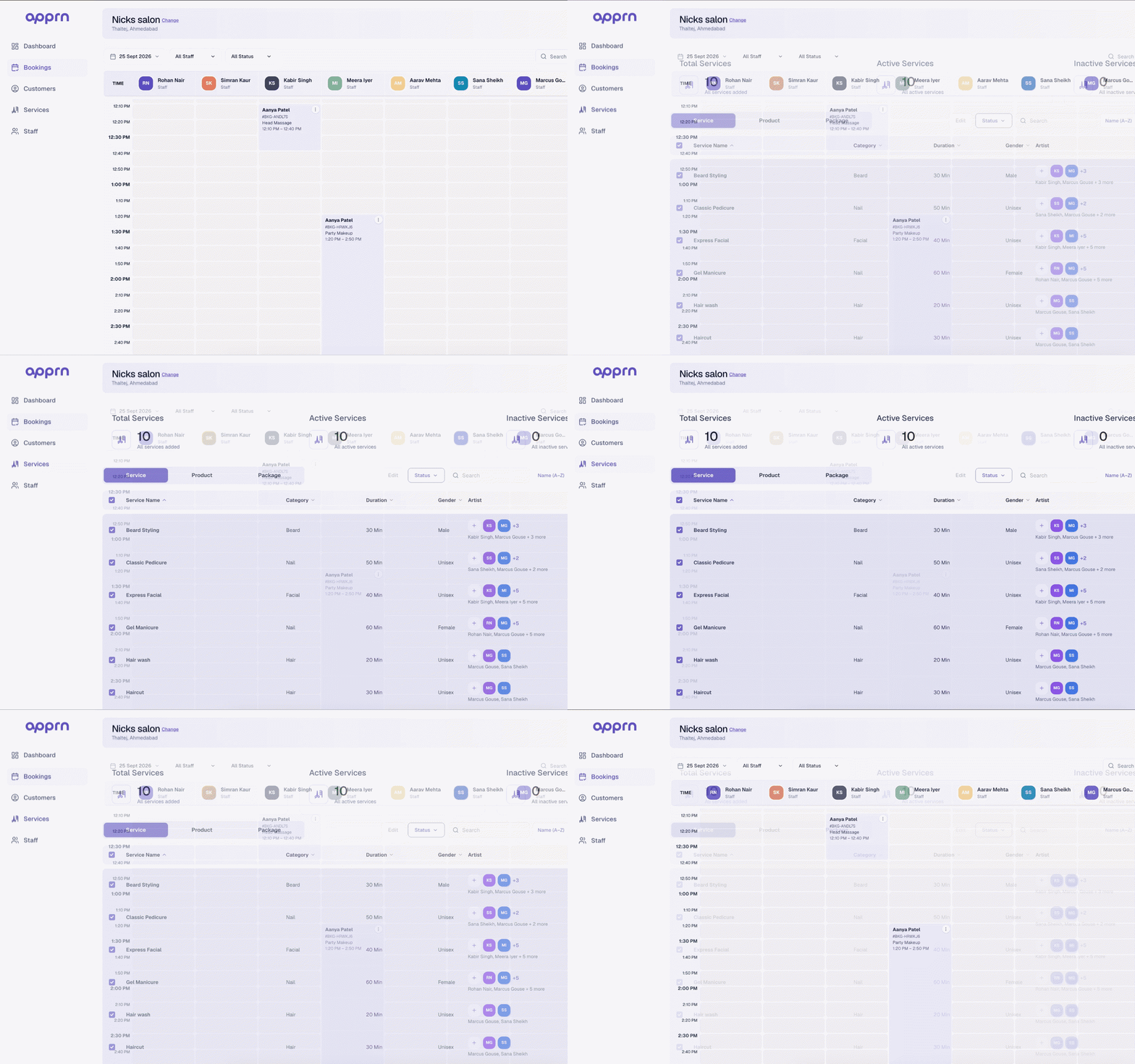
Real screens from the salon view.
A live test with real salons.
The go or no-go decision is made against kill criteria set before the test. We'll publish the criteria before we publish the result, so the call can't be rewritten afterwards.
In the Journal: why apprn's spine is a rule rather than a model, in what breaks when a prototype meets real users, and how we hold our own ventures to account in how to evaluate a venture studio.
Built with the services we sell.
AI Product Build
The verified-service spine, the artist app and the WhatsApp layer, built to the same stages and gates.
AI Product Build