otlo
Community intelligence for the people who build communities. Distribution, reach and signal in one surface.
Community builders build on rented land.
The people who run clubs, networks and collectives do the work of gathering, and own none of the relationship. Group chats hit their limits and expose members' phone numbers. Social reach now has to be paid for. Nothing exports.
And the event ends, and the community goes with it. Ticketing hands over a spreadsheet of emails and goes quiet, so every gathering starts from zero.
The demand moved offline. The software didn't.
The demand for community moved to real-world gatherings: run clubs, supper clubs, hobby collectives, creator meetups and city networks. Their builders run them on a group chat, a spreadsheet and an Instagram account.
The name is the thesis. An otlo is the raised step at the front of a Gujarati pol house: the seat between the street and the home, where neighbours stopped and strangers became regulars. Every other tool is a wall, a server or a channel. otlo is built as a threshold.
One arc, not a single point.
otlo is designed around the whole life of a community: people find it, gather, keep coming back, and the builder can see what's working and do it again in the next city.
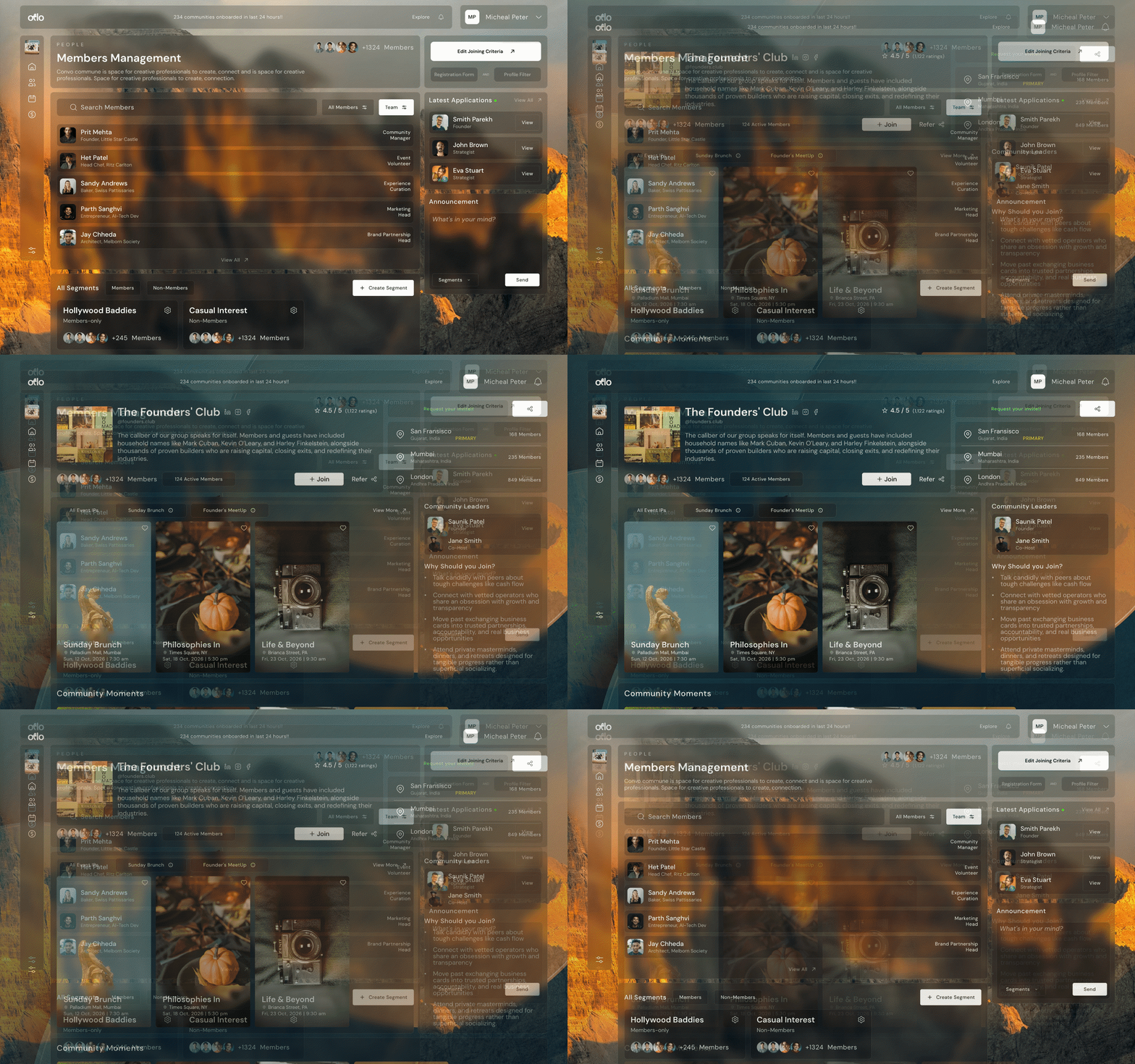
- Members management: the member list and roles, applications, announcements and segments, owned by the community.
- Community pages: upcoming gatherings, locations and the people who lead them.
Real screens from the live product.
In market, with customers paying real money.
Paying customers prove willingness to pay. They don't yet prove product-market fit, and we'll only claim that once retention data supports it.
In the Journal: otlo's workaround as evidence, in is it worth building?, and why our labels stay strict, in how to evaluate a venture studio.
Built with the services we sell.
AI Product Build
Thesis to live product, with the same stages and gates we run for clients.
AI Product Build