
On this page
In short
- A studio's portfolio is the one proof a competitor can't copy. Positioning can be rewritten overnight; an honest record of stages and stops can't.
- Kill discipline is the best single signal: stop conditions written before the test, and ventures actually stopped when they miss them.
- Know which model you're backing. A capital-backed studio, a services-funded studio and a builder working with established businesses carry different risks.
- Check the ownership of each venture as carefully as the idea. A studio can build a good company that nobody else can invest in.
Experienced investors and operators tend to evaluate a venture studio the way they'd evaluate a fund: the team, the thesis, the logos. Those matter less than they seem. A studio's pitch is easy to write and hard to check. Its habits are the opposite: hard to fake, and visible to anyone who asks the right questions. This is our list of those questions. We've run the portfolio checks on our own ventures, because a checklist its author won't run on its own work isn't worth much.
01What is a venture studio?
A venture studio starts companies rather than backing them. It generates or selects the idea, supplies the early team, the product and the build, and holds a meaningful stake in each venture it spins out. A venture fund backs founders who have already started. An accelerator or incubator supports existing startups through a programme. A studio sits earlier than both, before there's a company to back, which is why judging one needs different questions.
The model's appeal to experienced people is easy to see. It puts building capability next to capital and domain knowledge, and it can run several bets on shared people and shared methods. The risk is the mirror image: shared people can be spread too thin, and several bets can become a way of never admitting that any one of them failed.
02Which studio model are you backing?
Studios differ most in where the money for their ventures comes from, and that shapes almost every other risk.
| Model | How ventures are funded | What to check |
|---|---|---|
| Capital-backed studio | The studio raises a fund to create ventures, and usually keeps a significant stake in each | The equity terms, the room left for founders and later investors, and whether the fund's timeline pressures kill decisions |
| Services-funded studio | Paid client work funds the studio's own ventures | Whether the ventures get real attention, and whether the services and the ventures share one method |
| Venture builder for established businesses | A business funds a new venture built on its own customers, data and distribution | Who owns go-to-market, and how the venture is protected from the core business |
Ask a studio which model it runs before you ask anything else. The answer tells you which of the questions below will be hardest for it, and a studio that can't say clearly which it is will struggle with all of them.
03What should you check before backing a studio or one of its ventures?
Eight questions. None of them needs a data room, and each has an answer that's easy to recognise when it's good.
1. Do the stage labels match the evidence?
Ask what evidence supports the stage of each venture. A good answer is specific, and sometimes admits less than you hoped: "paying customers, but we can't call it fit yet" is a stronger answer than "strong traction".
2. Has the studio stopped anything on time?
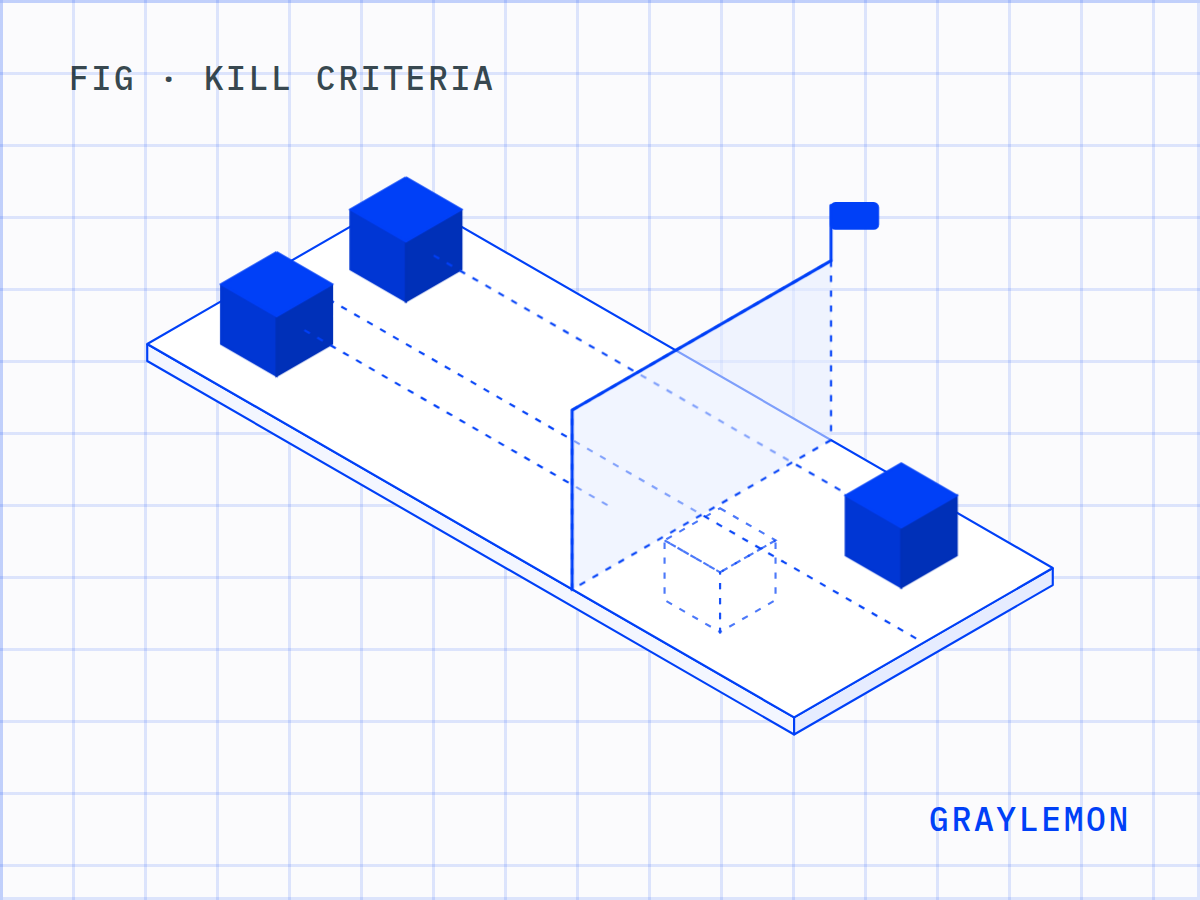
Ask which ventures were stopped and which criteria they missed. A studio that has never stopped anything either chose perfectly or never decided what failure looked like. The second is far more common.
3. Can you see the ventures that aren't on the website?
Ask for the full list, including paused and stopped ventures, even if it's shared privately. A portfolio page shows what a studio wants you to see. The full list shows how it spends its time.
4. How are shared people allocated?
Ask who works on which venture, how their time is split, and what happens when a client or another venture needs them urgently. A good answer is a rule. "We flex" means the loudest venture wins.
5. Who owns each venture?
Ask who wakes up responsible for the company. A good answer names a person with a real stake, or an honest plan to recruit one. A venture run entirely by studio staff is a project until someone owns it.
6. What does the ownership look like?
Ask how much of each venture the studio holds, and what's left for the founder, the team and later investors. A studio can build a good company that nobody else can invest in, because there isn't enough ownership left to motivate a founder or fit a later round.
7. How are ventures funded when money tightens?
Ask which venture gets cut first, and who decides. A stated rule is a good sign. Surprise at the question isn't.
8. What's the path to independence?
Ask when a venture leaves the studio. Our own answer comes from the gates we use across the six stages of Stuck-to-Scale. The last stage, Grow, is graduation to an independent company. The question at that gate is whether the venture compounds without the studio pushing it.
A studio that has never stopped a venture didn't choose perfectly. It never decided what failure looked like.
04How does our own portfolio hold up?
Here are the portfolio checks, run on our own ventures. This is the build log part of the piece: the decisions we made, and what they cost.
- Stage labels. otlo, our community intelligence product, is labelled "In market, paying customers". Paying customers prove willingness to pay. They don't yet prove product-market fit, and we'll only claim fit once retention data supports it. apprn, agentic salon management, is labelled "Live test with salons", because that's what it is.
- Stopping on time. apprn's go or no-go decision is made against kill criteria set before the test began. We'll publish the criteria before we publish the result, so the decision can't be rewritten afterwards.
- What isn't on the site. Ventures that are paused or haven't started don't appear on our website at all. That makes the portfolio look smaller than a list of every idea we've had. It's the honest size.
- Equity. We don't do equity-only builds. When we build a venture with an established business, any equity or revenue share comes only after launch, and only on top of fees.
- Method. We build our own ventures with the same stages and gates we sell to clients. If the method has a weakness, we pay for it too.
One of those decisions deserves the full build-log treatment, because it cost us something visible.
Decision · show ventures only at their true stage
- What we chose: every venture is shown at the stage its evidence supports, and paused or unstarted ventures aren't shown at all.
- What we gave up: a fuller-looking portfolio, and a label for otlo that sounds bigger than "paying customers".
- Why: the stage label is the first thing a careful investor checks, and the easiest thing to exaggerate. We'd rather be checked and found accurate than admired and found out.
- What we got wrong before: our previous website overstated two ventures and understated otlo. We tore it down in public.
05Where does an experienced operator add the most?
If you're weighing a studio as someone who has spent years inside an industry, your money may matter less than what you know. The assets a studio can't build are the ones veterans carry: knowledge of how a market really buys, relationships with the people who decide, and credibility that shortens every early sales conversation.
That points to three roles, each with different questions attached.
- Backing a venture. Run the eight checks on the studio, then judge the venture on its own evidence: the same questions we'd ask of any idea, at the stage it has actually reached.
- Co-founding a venture. The best studio co-founders are people who would have started the company anyway and lacked the build layer. If you'd only do it for the equity, it's the wrong venture for you.
- Bringing a thesis. A specific market insight, with evidence behind it, is worth a conversation with a studio before it's worth a pitch deck.
In each role, ask the studio what it needs from you as directly as you ask what you'll get. A studio that can't say what it needs from a partner hasn't decided what the partner is for.
06What are the red flags?
- A portfolio count with no names behind it.
- Stage labels with no evidence behind them, or labels that never move backwards.
- No stopped ventures, ever.
- Talk of "delivering product-market fit" rather than measuring whether it's there.
- Studio staff described as founders, with no stake in the outcome.
- Ownership terms that are "flexible" until they're written down.
07What should you ask for in writing?
Conversations about a studio are generous by nature. Before you commit money or years, ask for the answers on paper. None of these documents should take a well-run studio long to produce.
- The full venture list, with each venture's stage and the evidence behind it, including the ventures that were stopped and why.
- The stop conditions for every active venture, dated, so you can see they were written before the results arrived.
- Ownership for each venture: the studio's stake, the founder's, the team's, and what's reserved for later investors.
- The allocation rule: how shared people and money are split across ventures, and who decides when they conflict.
- The graduation criteria: the point at which a venture leaves the studio and stands on its own.
- A conflicts policy. If the studio also sells services, what happens when a client works in the same market as one of its ventures? The answer should exist before the situation does.
The last item is the one most often missing, and it matters more as a studio grows. A studio that builds for clients and for itself will eventually meet a client whose idea sits next to one of its own ventures. How it handles that moment tells you whose interests come first.
08Questions investors and operators ask
How is investing in a studio different from investing in one of its ventures?
Backing the studio is a bet on its method and people across many ventures, including ones that don't exist yet. Backing a venture is a bet on one company, with the studio as a large shareholder. The ownership, the risks and the information you'll need are different for each.
How much equity does a venture studio usually take?
It varies widely with the model, and a general figure would mislead more than it would help. Ask for the actual terms in writing, and check that enough ownership is left for a founder, the team and later investors.
What's the difference between a venture studio and an incubator?
An incubator or accelerator supports startups that already exist. A studio creates them: it chooses or generates the idea, builds the first product and assembles the early team.
Can I talk to Graylemon about one of its ventures?
Yes. Book a call and name the venture. We'll walk you through its stage and the evidence behind it, and put anything that matters in writing, the same documents this checklist asks for.
Where this fits